Analytical laboratory · pharmaceutical grade
We measure what you send us.
Material arrives, is logged, prepared and run by a named method. What comes back is the figures that run produced, the method behind each one and the date it was made — on a certificate carrying an identifier, so anyone holding it can check the result against our record.
- Measured here
- Every figure comes from an analysis run in this laboratory, by the method the certificate names and on the date it gives.
- Against a standard
- Quantities are measured against certified reference material of known purity, not against a previous batch, which measures consistency rather than truth.
- Verifiable
- Every certificate carries an identifier anyone can check against our records.
- Transparent
- Corrections create a new version. Nothing is quietly edited after publication.
The methods we run.
Five techniques, run in this laboratory. What each one measures, what it is read for, and where it stops — because the method behind a figure is most of what the figure is worth.
Gas chromatography with flame ionisation detection
Volatile components are carried by an inert gas through a heated capillary column and separated by boiling point and by affinity for the column coating, then burned in a hydrogen flame whose ion current is proportional to the carbon passing through it.
- Reports
- Residual solvents · Volatile impurities · Assay of a volatile substance
- Cannot establish
- Anything not volatile is invisible, and most of what a certificate is about usually is not. Gas chromatography says nothing about the purity, identity or molecular weight of an active that will not travel as a gas; it is on a certificate for what the liquid methods cannot reach.
Liquid chromatography tandem mass spectrometry
Chromatographic separation followed by tandem mass analysis, confirming the observed molecular weight against the theoretical value for the declared sequence.
- Reports
- Identification (MS) · Confirmation of identity
- Cannot establish
- Mass is not structure. Two different molecules with the same formula have the same mass, and the intact mass alone cannot separate them. Distinguishing them needs the fragment pattern, and even then not always.
Reversed-phase HPLC with UV detection
Separation on a C18 stationary phase with gradient elution, quantified by UV absorbance against a certified reference standard.
- Reports
- Purity · Identity · Net quantity
- Cannot establish
- A purity figure by UV area is an area percentage at one wavelength. It is not a mass percentage, and converting between them requires response factors the method does not provide.
Scanning electron microscopy
A focused electron beam is scanned across the specimen and the secondary and backscattered electrons it releases are collected point by point, building an image of surface topography and compositional contrast at magnifications an optical microscope cannot reach.
- Reports
- Appearance and particle morphology · Coating and film integrity · Foreign particle characterisation
- Cannot establish
- An image is evidence about the fields imaged and about nothing else. An instrument that looks at a few square microns at a time can be pointed at the most convincing part of the stub, and the resulting micrograph will be entirely true and completely unrepresentative. A morphology statement is worth what its sampling is worth, so a certificate citing one should say how many fields were examined and how they were chosen.
Supercritical fluid chromatography with UV detection
Separation on a chiral stationary phase with supercritical carbon dioxide and an alcohol co-solvent as the mobile phase, resolving enantiomers and quantifying their ratio by UV absorbance.
- Reports
- Enantiomeric excess · Diastereomer and isomer separation · Purity of low-polarity compounds
- Cannot establish
- Enantiomeric excess is not chemical purity, and the two are routinely confused. A sample can be 100% ee and still be half solvent, half degradant or the wrong compound entirely: ee describes the ratio between two mirror images and says nothing about anything else in the vial. A certificate carrying ee% and no purity figure has reported one thing, not two.
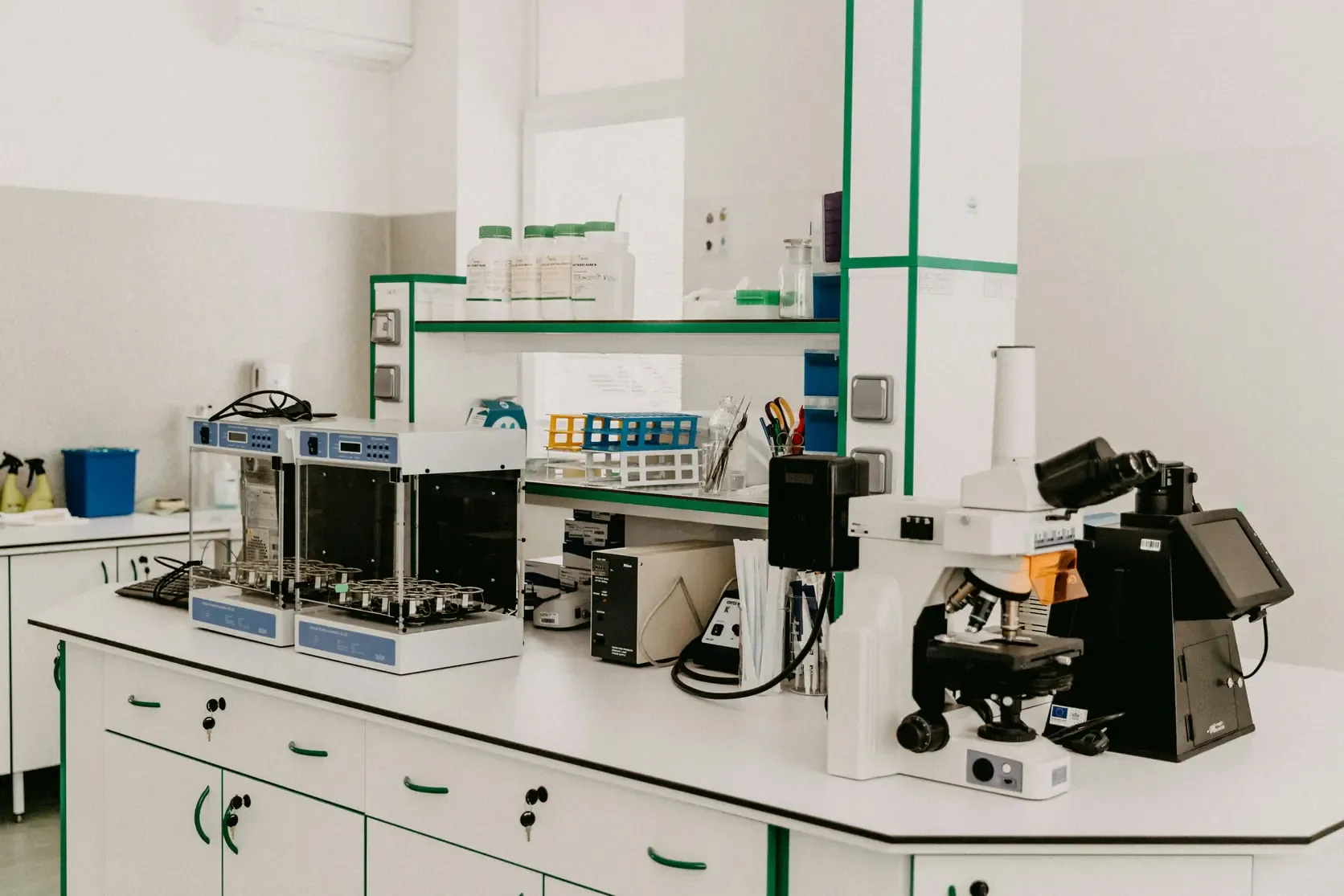
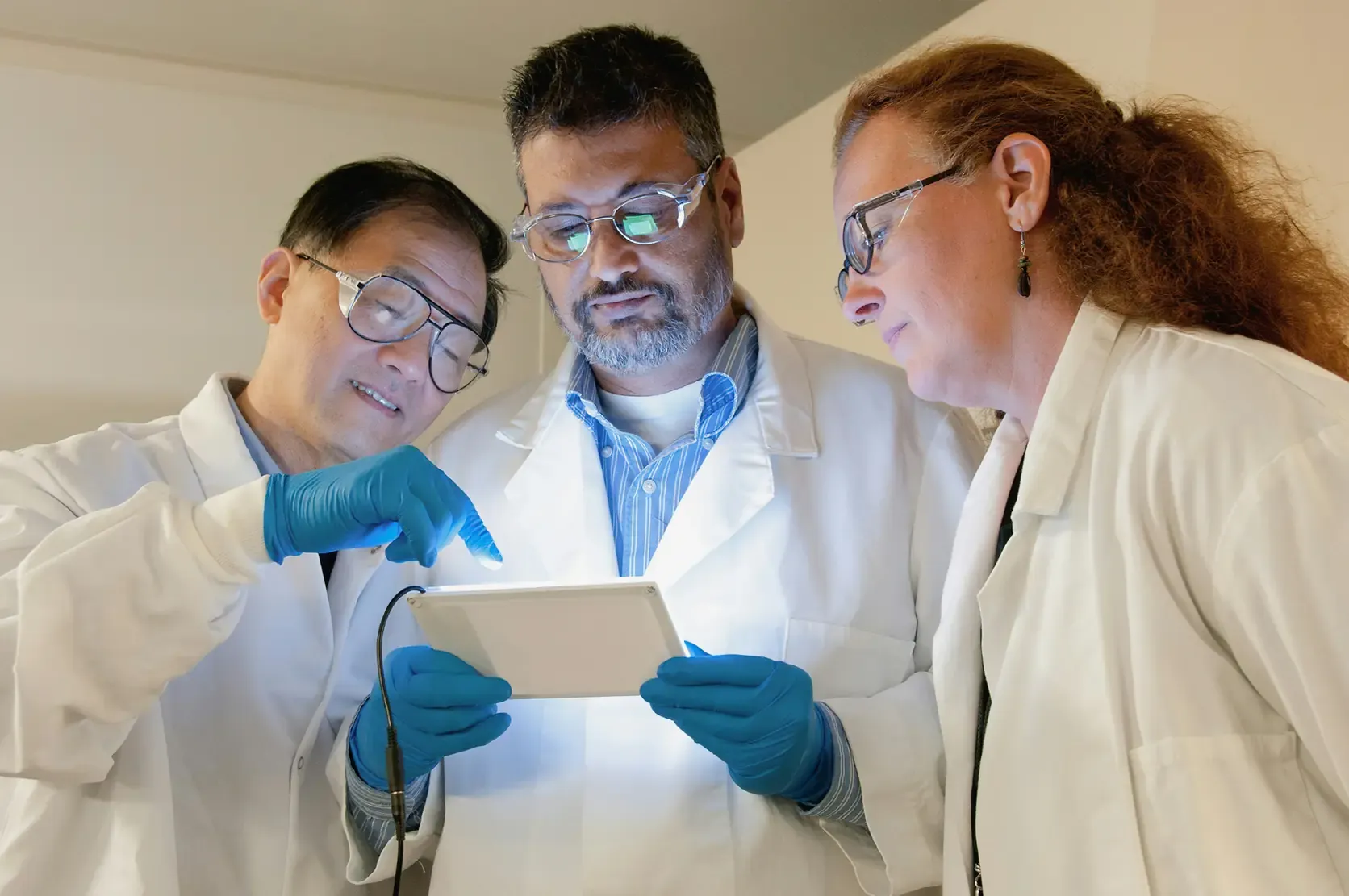
Instrumentation of the kind that produces the figures a certificate reports. Illustrative: not a photograph of our own bench.
What we determine.
The same determinations on every run, so two results can be compared line for line rather than by reading two different documents.
What each of those lines can support, and where it stops, is the subject of what a certificate says.
Common to every certificate
One method cited and four determinations, each one measured here and reported with the date the analysis was run.
- Identity against a certified reference standard
- Observed molecular weight by MS
- Purity by RP-HPLC-UV
- Net quantity against the declared amount
- Method
- RP-HPLC-UV
- Purity specification
- ≥ 98.0%
- Basis
- Analysis carried out here, on the dated sample received
What these methods cannot establish.
An analysis answers the questions its method can reach. These are the questions these five cannot, whatever the sample — worth knowing before you need an answer one of them was never going to give.
Each method above answers one question and not the others — how much of what is here, is this the compound it is declared to be, what is left in it, what does it look like at a micron — which is why they appear as separate lines on a certificate rather than one. Not all of those lines are numbers: an imaging method yields a described observation, and a described observation is worth exactly what the sampling behind it is worth. None of them reaches any of the four below.
If you need one of them on a certificate, it has to be measured by a laboratory equipped for it. We run the methods above and report what they produce; a determination nobody ran is a line no certificate can carry.
Produced by none of these methods
- Water content
- Measured by: Karl Fischer titration
- Counter-ion content and salt form
- Measured by: Ion chromatography, elemental analysis
- Endotoxin, sterility and bioburden
- Measured by: LAL assay, compendial microbiological testing
- Biological activity or potency
- Measured by: A bioassay against a reference preparation
From the material arriving to the result published.
Four stages, each leaving a record, and you can see which one your work is at any point.
Ask
Tell us what the certificate has to establish.
Write to us with the material and what you need established about it — purity, identity, residual solvent, enantiomeric excess. We answer with which method answers that question, and say so plainly when a question cannot be answered by any of them.
Send the material
The sample arrives, and is logged before anything is run.
Send it sealed and labelled. Arrival, condition and quantity are recorded before any analysis begins, because a figure that cannot be tied to a specific sample on a specific date cannot be investigated later.
Analyse and issue
The method is run here, and the certificate reports what it found.
The analysis is carried out in this laboratory against a certified reference standard, and the certificate names the method, the date and the figures it produced. It carries a verification identifier and a QR code that resolve against our record.
Verify
Anyone holding it checks the number against our record.
The certificate carries an identifier, printed on its face and encoded in its QR code. Typing that number into the verification page resolves it against our record — no account, and no list to search: the number is the only way in, and the check is the same one for you as for whoever you send the certificate to.
What verification actually proves.
A ZEIKKA certificate does not tell you the material is good. It tells you exactly what was measured, by which method, and on what date — and it lets anyone check that against our record rather than against the copy they were handed.
- A named method
- The certificate names the method that produced each figure and the date it was run, so a result can be read against what that method can support.
- A record, not a file
- Verification shows what our records hold for that number, not the PDF in front of you — so an altered copy fails against the original.
- No silent edits
- A correction becomes a new version and the old one is kept as superseded. A revoked certificate stays visible, with its reason.
Public verification
Every figure comes from a run.
Every run is on the record.
Holding a certificate? Type the COA number printed on it and we will confirm it against our record.
A certificate describes one batch of one material, analysed on one date. The number printed on it is what resolves against our record — not the vial, which may have been repackaged since.
Questions we are asked.
Six of them, answered here rather than by return of email. Two are on this list because the wrong assumption is the easy one.
Anything else, and the answer comes from a person rather than a page. Write to the laboratory.
Do you test the material?
Yes. The material is received here, logged, and analysed in this laboratory by the method the certificate names. Every figure on a certificate is a measurement we made, on a dated sample, against a certified reference standard.
What do I have to send you?
The material itself, sealed and labelled, along with what you need established about it. Tell us the compound, the batch and the question — purity, identity, residual solvent, enantiomeric excess — and we will confirm which method answers it before anything is run.
How does somebody check a certificate?
By typing the report number printed on it into the verification page. The number resolves against our record and returns what we hold for it. No account is needed, and the check is the same one for you as for whoever you send the certificate to.
Can I browse the certificates you have issued?
No. There is no register to page through and nothing to search. A certificate is reached by the number printed on it and by nothing else, which is also the only arrangement under which a certificate that is not yours stays not yours.
What can a certificate not state?
Anything the methods run on it did not measure. Chromatography and mass spectrometry report purity, identity and quantity; they say nothing about water content, salt form, endotoxin, sterility or biological potency. A determination nobody ran is a line no certificate can carry.
What happens if a certificate turns out to be wrong?
A correction is issued as a new version and the previous one is kept, marked superseded. Nothing is quietly edited after publication, and a revoked certificate stays visible on verification with the reason it was revoked.
Tell us what you need measured.
Tell us what your analytical data covers and what the certificate has to state. We will say which analysis answers that, and whether yours does.